THE FACE PLASTIC SURGERY
Providing Strong Structural
Reinforcement for
Long-Lasting Results
Autologous Costal
Cartilage Rhinoplasty
THE FACE PLASTIC SURGERY
Providing Strong Structural
Reinforcement for
Long-Lasting Results
Autologous Costal Cartilage
Rhinoplasty for Enhanced
Structural Support
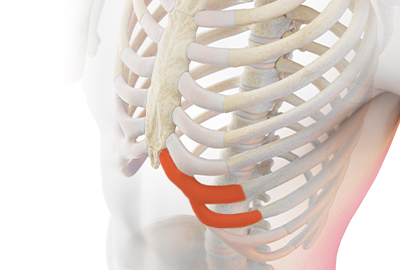
Costal Cartilage Harvesting Site
Cartilage is harvested through a
2–3 cm incision at the end of the
6th or 7th rib beneath the chest.
3–4 segments of 3 cm of cartilage
can be obtained, providing sufficient
material for structural reinforcement.
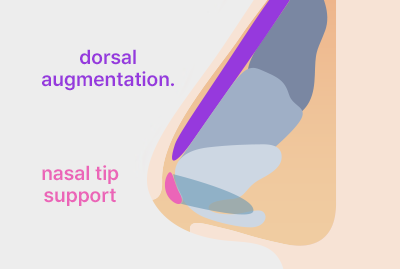
Characteristics & Uses of Rib Cartilage
Autologous rib cartilage is
firm, durable, and abundant,
making it ideal for nasal tip
support and dorsal augmentation.
Because it is the patient’s
own tissue, the risk of foreign
body reaction or inflammation
is low, making it one of the
most reliable materials in rhinoplasty.
Importance of Refinement
Before use, rib cartilage
must be carefully refined to
minimize warping and absorption.
Specialized carving techniques
are applied to shape the cartilage
to prevent warping, the natural
tendency of cartilage to revert
to its original shape.
THE FACE PLASTIC SURGERY
Is Rib Cartilage Only for Revision Surgery?
Autologous Costal Cartilage
Rhinoplasty
Although often associated with
revision cases, rib cartilage
can also be used in primary
rhinoplasty depending on nasal
structure and aesthetic goals.
What matters most is not
surgical history, but the
patient’s anatomy and
desired outcome.
-
TYPE 01
Primary Surgery
-
When septal cartilage is shorter than 2 cm or too thin to provide support
-
When a more defined and three-dimensional nose shape is desired
Rib cartilage provides sufficient strength and
volume for stable tip support and desired height
-
TYPE 02
Revision Surgery
-
When complications such as contracture or deformity require correction
-
When previously used surgical materials must be replaced
Rib cartilage allows complete replacement
of the previously used surgical materials and
reconstruction of nasal structure with a stable, reliable graft
-
THE FACE
TIP
What Matters Is Not Whether
It Is Revision Rhinoplasty
Autologous costal cartilage is a
viable option for both primary and
revision rhinoplasty when structural
stability and refined design are desired.
THE FACE PLASTIC SURGERY
The Ideal Nasal Profile
for Your Facial Structure
Which Nasal Profile
Suits You Best?
-
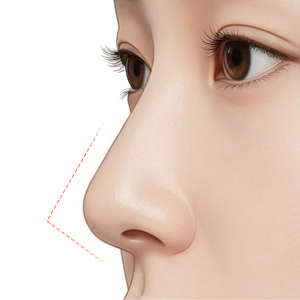 TYPE 01
Straight Nose
TYPE 01
Straight Nose
Smooth and refined
-
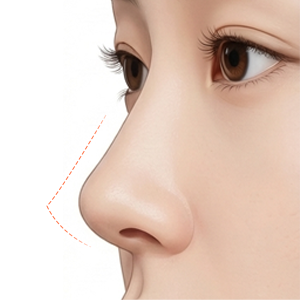 TYPE 02
Semi-Straight Nose
TYPE 02
Semi-Straight Nose
Natural-looking with well-defined dimension
-
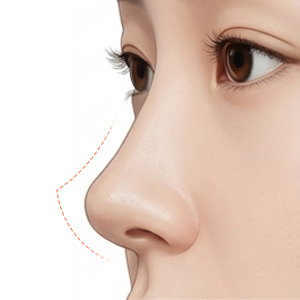 TYPE 03
Curved Nose
TYPE 03
Curved Nose
Soft, elegant, and feminine
THE FACE PLASTIC SURGERY
Paying Attention to Every Detail
to Deliver Optimal Results
What Makes
THE FACE Rhinoplasty Special
-
 KEY POINT 01
Individually customized nose design
based on precise analysis of nasal structure
and facial proportions
-
 KEY POINT 02
Highly experienced specialists
employing advanced techniques
to minimize swelling and scarring
-
 KEY POINT 03
Systematic recovery and
aftercare programs
for faster recovery and
long-lasting results
THE FACE PLASTIC SURGERY
Recommended For
-
Those who prefer using their own tissue, instead of implants
-
Those who have insufficient cartilage in the nose or require strong structural support
-
Those who desire a well-defined, prominent nasal tip
-
Those who require revision surgery due to implant-related
complications such as inflammation or contracture
THE FACE PLASTIC SURGERY
THE FACE Rhinoplasty:
Before & After Photos
* These photos were taken under identical conditions with patient consent.
* Results may vary by individual, and inflammation, bleeding, and/or infection may occur.


 Duration
 Anesthesia
 Hospitalization
 Stitch
  Recovery